
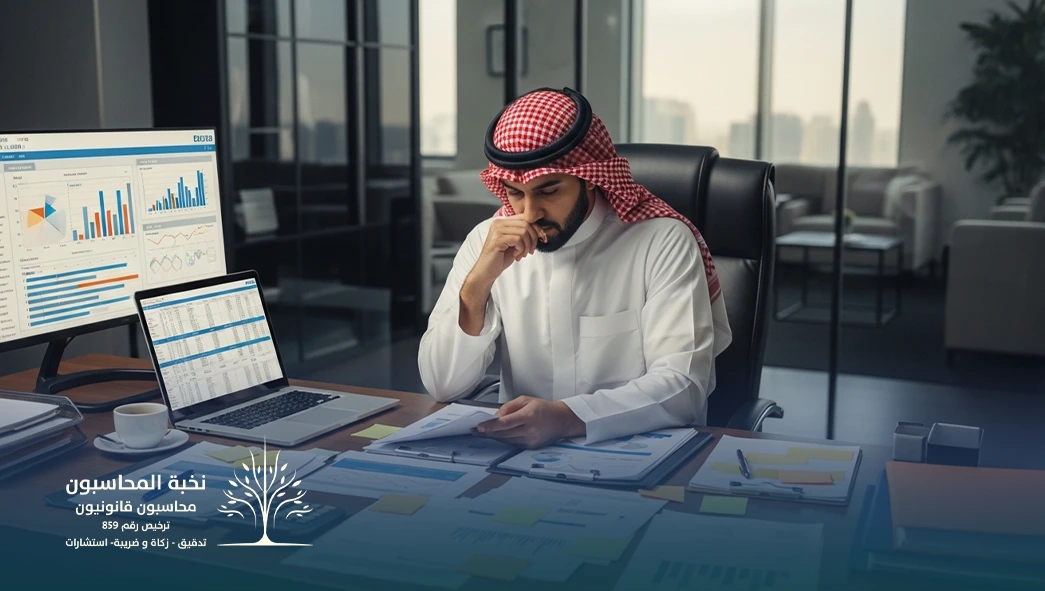
In the modern business environment, the role of the internal auditor is no longer limited to reviewing numbers or detecting errors. Instead, it has become a key element in supporting decision-making and enhancing governance within organizations. With this evolution, responsibilities have increased, and a range of obstacles has emerged that directly impact the quality and efficiency of work.
The challenges of internal auditors are among the most prominent issues facing companies today, especially with the increasing complexity of operations, the advancement of systems, and the growing regulatory requirements. Therefore, understanding these challenges and dealing with them intelligently not only reflects on audit success but also on the overall performance of the organization.
In this article, we review the most important challenges faced by internal auditors, along with practical solutions to overcome them professionally.
Limited Resources: How Do They Affect the Efficiency of Internal Audit Tasks?
The quality of any audit process depends on the availability of sufficient resources, whether human, financial, or technological. When these resources are limited, it becomes difficult for the internal auditor to perform all required tasks efficiently.
This issue becomes particularly evident when trying to cover a wide scope of operations with a small team or limited tools, making it one of the most significant challenges of internal auditors that affect final outcomes.
How can this challenge be addressed?
- Prioritizing based on risks
Directing efforts toward the most impactful areas to ensure the best results from internal audit tasks. - Relying on technology
Using automation tools to reduce time spent on routine tasks. - Utilizing external expertise
Supporting the team when there is a shortage of resources.
Smart resource management helps reduce the impact of this challenge and improve audit quality.
Keeping Up with Regulatory Changes: An Ongoing Challenge in a Changing World
With continuous updates in regulations and laws, it becomes difficult for any internal auditor to keep up with all changes without a clear mechanism for continuous updates.
This challenge does not only affect the accuracy of reports but may also expose the organization to legal risks, making it one of the most critical challenges facing internal auditors today.
Effective strategies to keep up:
- Continuous professional development
Through courses and certifications in governance and auditing. - Collaboration with legal departments
To understand the impact of changes and apply them correctly. - Following official sources
To stay consistently updated on regulatory changes.
Adhering to these practices enhances the role of internal audit tasks in protecting the organization from risks.
Maintaining Independence: How Does the Internal Auditor Balance Neutrality and Collaboration?
Independence is the foundation of any successful audit process. However, in practice, it may be threatened by administrative pressure or conflicts of interest.
This challenge is one of the most sensitive challenges for internal auditors, as it directly affects the credibility of results and management’s trust in reports.
Mechanisms for maintaining independence:
- Direct reporting to senior management
Such as the board of directors or audit committee to reinforce neutrality. - Rotation of audit tasks
To avoid bias or personal influence. - Strengthening ethical values
By adhering to governance and integrity principles.
Maintaining independence ensures that internal audit tasks are carried out objectively and professionally.
Difficulty Accessing Data and Data Quality: A Challenge Affecting Analysis Accuracy
Audit quality heavily depends on the availability of accurate and integrated data. However, internal auditors often face difficulties in accessing data or dealing with inaccurate information.
This challenge is one of the most prominent internal auditor challenges in the digital age, as data quality directly impacts the accuracy of results.
How can this be improved?
- Implementing data governance systems
To ensure data accuracy and accessibility. - Using advanced analytics tools
To handle large volumes of data efficiently. - Collaborating with IT departments
To provide appropriate access and systems.
Improving data quality enhances the efficiency of internal audit tasks and increases the reliability of reports.
Developing Auditor Skills: The Challenge That Shapes the Future
With rapid changes in the business environment, it is no longer sufficient for internal auditors to rely solely on traditional knowledge. Continuous skill development is essential.
This is considered one of the most important challenges for internal auditors, as weak skills directly affect work quality and the ability to keep up with changes.
Best ways to develop skills:
- Continuous training
To enhance internal audit skills and keep up with best practices. - Obtaining professional certifications
Such as CIA and CISA to boost competence. - Diversifying practical experience
By working across different areas within the organization.
Skill development enables internal auditors to better face challenges and deliver real added value.
Frequently Asked Questions
Can internal auditor challenges be completely eliminated?
No, they cannot be completely eliminated, but they can be managed and minimized through proper planning and the use of appropriate tools.
What is management’s role in supporting internal auditors?
Providing resources, supporting independence, and promoting a governance culture within the organization.
Do challenges differ by industry?
Yes, they vary depending on the nature of the sector, as some industries face greater regulatory or technical complexities.
How does technology impact internal auditors’ work?
It improves efficiency but also introduces new challenges related to data and security.
When does a company need to develop its internal audit function?
When errors are repeated, reports are weak, or there is an inability to keep up with changes.
Conclusion
In light of rapid developments, internal auditor challenges have become a reality that cannot be ignored. However, they also represent an opportunity to improve performance and strengthen the role of auditing within organizations.
By understanding these challenges and working to address them, any internal auditor can enhance the efficiency of internal audit tasks and support the implementation of best governance practices.
If you are looking for professional support to help you overcome internal auditor challenges and develop your audit function, “Nokhbat Al Mohaseboon” offers the expertise and solutions you need.
Contact us now and start transforming challenges into real opportunities for success.