

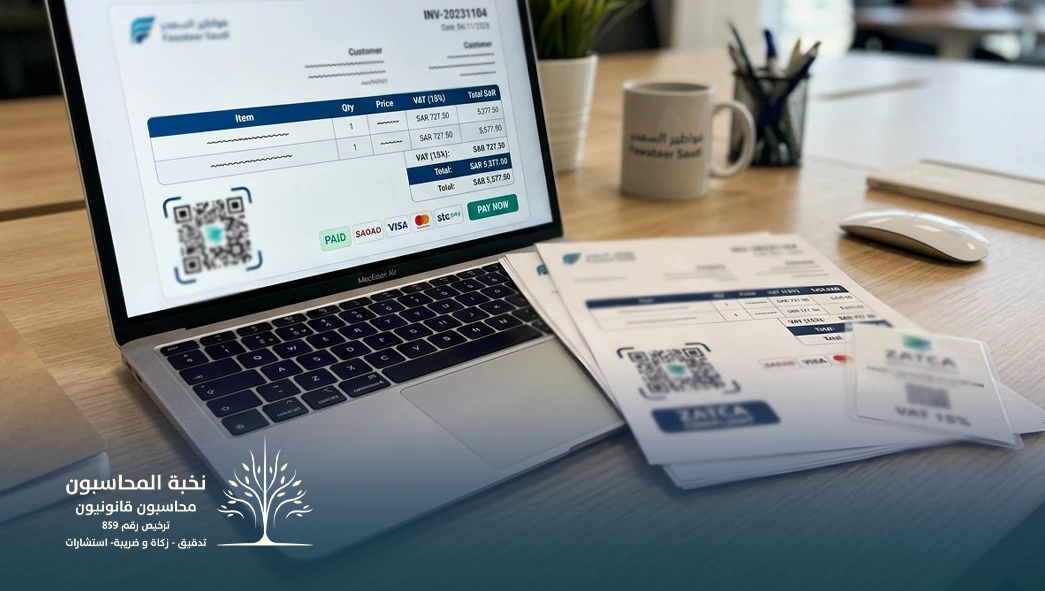
The Saudi E-Invoice has become one of the most important business management requirements in the Kingdom of Saudi Arabia as part of the country’s digital transformation initiatives aimed at improving financial efficiency, enhancing transparency, and ensuring tax compliance. As digital systems continue to expand and the business environment evolves, companies, organizations, and taxable individuals need to understand how electronic invoicing works and how to implement it correctly.
The importance of the Saudi E-Invoice goes beyond regulatory compliance. It also contributes to improving financial operations management, reducing accounting errors, and saving the time and effort associated with issuing and storing traditional paper invoices.
In this guide, we explore the concept of electronic invoicing, its implementation requirements, its different types, its key benefits, and how businesses can achieve full compliance with the system.
What Is the Saudi E-Invoice?
The Saudi E-Invoice is an invoice that is issued, stored, and exchanged electronically through an approved invoicing system without the need for traditional paper invoices or handwritten documents.
The system is designed to document business transactions more accurately and reliably while providing clear financial data that supports transparency, combats the hidden economy, and improves the efficiency of tax procedures.
Electronic invoices include all invoices and notices related to commercial transactions that are subject to tax regulations, whether between businesses or between businesses and end consumers.
How Does Electronic Invoicing Work?
Electronic invoicing relies on a specialized digital system to issue, process, and store invoices in accordance with regulatory requirements.
The process generally involves the following steps:
- Creating the invoice electronically through an approved invoicing system.
- Entering all essential transaction details.
- Automatically calculating applicable taxes and fees based on the provided information.
- Issuing the invoice in an approved electronic format.
- Delivering the invoice to the customer electronically.
- Storing and archiving the invoice within the system for the required retention period.
- Integrating the invoice with relevant authorities when integration requirements apply.
This process helps minimize manual intervention and improves the accuracy of financial data within the organization.
The Importance of the Saudi E-Invoice for Businesses and Organizations
The Saudi E-Invoice represents a significant step toward creating a more efficient and transparent business environment by offering numerous operational and financial advantages to organizations of all sizes.
Key benefits include:
- Reducing errors caused by manual data entry.
- Accelerating invoice issuance and approval processes.
- Improving the quality of financial records and reports.
- Enhancing compliance with tax regulations.
- Increasing transparency in business transactions.
- Simplifying auditing and financial review procedures.
- Reducing printing, storage, and paper archiving costs.
- Improving customer experience through faster invoice delivery.
Electronic invoicing also helps businesses modernize their financial systems and keep pace with the Kingdom’s ongoing digital transformation efforts across various sectors.
Who Is Required to Implement the Saudi E-Invoice?
The Saudi E-Invoice is mandatory for all individuals and entities subject to Value Added Tax (VAT) in the Kingdom of Saudi Arabia in accordance with applicable regulations.
This includes:
- Commercial companies.
- Sole proprietorships.
- Professional service providers.
- Online stores and e-commerce platforms.
- VAT-registered entities.
Organizations subject to the regulations must ensure that they use invoicing systems that comply with the required standards to issue invoices correctly.
Saudi E-Invoice Requirements
To achieve full compliance, businesses must adhere to several essential requirements when issuing electronic invoices.
These requirements include:
- Using an electronic invoicing system that complies with approved regulations.
- Issuing invoices in a structured electronic format.
- Including all mandatory invoice information.
- Retaining invoices and records electronically.
- Providing a QR Code when required.
- Protecting data and preventing unauthorized alterations or tampering.
- Meeting integration requirements for businesses subject to system integration.
Compliance with these requirements helps businesses avoid violations and ensures smooth financial operations.
Types of Electronic Invoices in Saudi Arabia
Electronic invoices are classified into several types depending on the nature and purpose of the transaction.
1. Tax Invoice
A Tax Invoice is used for transactions between VAT-registered entities and includes all required tax-related information.
2. Simplified Tax Invoice
A Simplified Tax Invoice is commonly used for transactions involving end consumers and contains simplified information appropriate for such transactions.
3. Electronic Credit Note
An Electronic Credit Note is issued to reduce the value of a previously issued invoice due to product returns or corrections to invoice details.
4. Electronic Debit Note
An Electronic Debit Note is issued when additional charges or amounts need to be added to a previously issued invoice.
Choosing the correct invoice type is essential to ensure transaction accuracy and compliance with regulatory requirements.
What Happens If You Fail to Comply with Electronic Invoicing Requirements?
Failure to comply with Saudi E-Invoice requirements may expose businesses to regulatory violations and penalties under applicable regulations.
Common causes of non-compliance include:
- Issuing invoices that do not meet approved requirements.
- Using non-compliant invoicing systems.
- Failing to retain invoices electronically.
- Deleting or modifying invoice data improperly.
- Failing to meet integration requirements when applicable.
For this reason, businesses should regularly review their systems and procedures to maintain compliance and avoid future issues.
How Can Your Business Prepare for the Saudi E-Invoice System?
Early preparation can help businesses transition smoothly to electronic invoicing while minimizing operational challenges.
Key preparation steps include:
- Evaluating current accounting systems.
- Ensuring invoicing software complies with regulatory requirements.
- Training employees on electronic invoicing procedures.
- Regularly reviewing financial records and data.
- Seeking professional guidance and support when necessary.
Proper preparation enables organizations to manage their financial operations efficiently while achieving the required level of compliance.
Frequently Asked Questions
Is the Saudi E-Invoice Mandatory?
Yes. The Saudi E-Invoice is mandatory for VAT-registered entities and individuals in accordance with applicable regulations.
Can Electronic Invoices Be Issued Using Non-Compliant Software?
Businesses should use invoicing systems that meet regulatory requirements to ensure full compliance and proper invoice issuance.
What Is the Difference Between an Electronic Invoice and a Paper Invoice?
An electronic invoice is issued, stored, and exchanged digitally, whereas a paper invoice relies on printed documents and traditional storage methods.
How Long Should Electronic Invoices Be Retained?
Electronic invoices and financial records must be retained for the periods specified in applicable regulations and official guidelines.
Does Electronic Invoicing Help Reduce Accounting Errors?
Yes. Electronic invoicing relies on automation and minimizes manual intervention, improving data accuracy and reducing accounting errors.
Conclusion
The Saudi E-Invoice represents a major step toward developing a more efficient, transparent, and digitally advanced business environment. As compliance requirements and digital transformation initiatives continue to expand, proper implementation of the system has become essential for maintaining business continuity, avoiding violations, and improving the quality of financial operations.
If you need professional assistance with implementing the Saudi E-Invoice system or ensuring your organization is fully prepared for compliance, Nukhbat Al-Muhasiboon provides specialized accounting and advisory services to help you meet regulatory requirements efficiently and effectively. Contact us today to receive professional support and ensure a smooth transition toward a more advanced and compliant financial environment.