

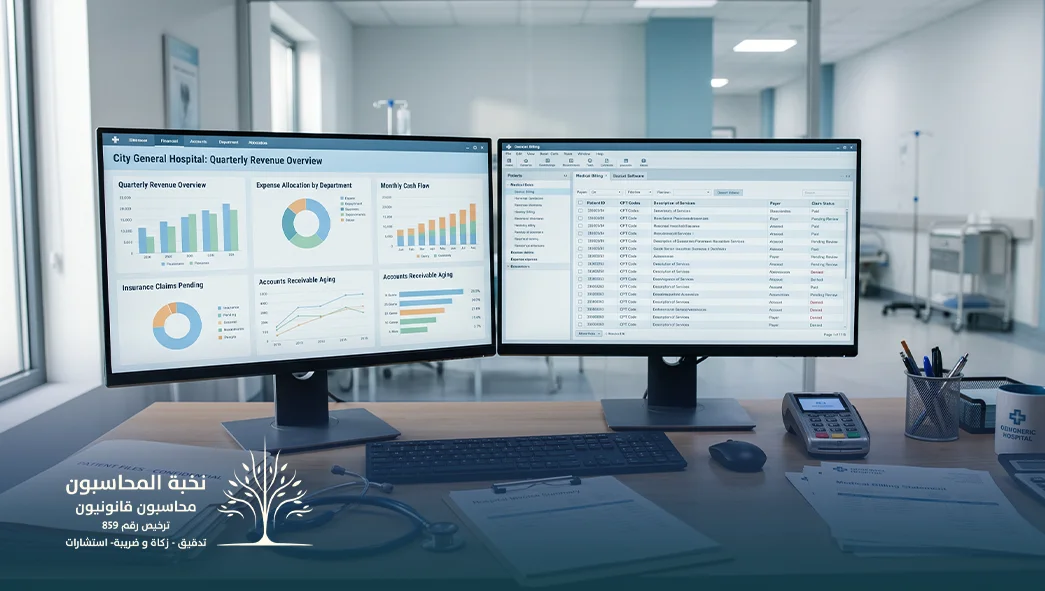
The healthcare sector in Saudi Arabia is one of the Kingdom’s most vital and sensitive industries. Financial management in this sector is not solely about numbers—it directly impacts the quality of patient care and the continuity of healthcare operations.
Hospitals, clinics, and medical centers face unique accounting challenges. They must balance patient care with the management of pharmaceutical inventories, medical supplies, insurance claims, and strict compliance with regulations issued by the Ministry of Health and the Zakat, Tax and Customs Authority (ZATCA).
This article explores the fundamentals of healthcare accounting and explains how a specialized accounting system can transform financial challenges into opportunities for sustainable growth and stability.
What Is Healthcare Accounting?
Healthcare accounting is a specialized accounting system designed to record and manage all financial transactions within healthcare organizations. It covers every stage of the patient journey—from registration and service delivery to insurance claims management and operational cost analysis.
Unlike traditional accounting, healthcare accounting goes beyond recording journal entries. It focuses heavily on revenue cycle management (RCM), accurate cost allocation for medical services, and maintaining healthy cash flow to support the organization’s long-term financial sustainability.
Why Is Healthcare Accounting Different from Other Industries?
Healthcare organizations require a specialized accounting approach because of their complex operational and financial structures.
Multiple Revenue Sources
Healthcare providers receive income from various channels, including direct patient payments, insurance companies, government entities, and corporate healthcare contracts. Each source has different payment terms and collection cycles.
Complex Revenue Cycle Management (RCM)
The revenue cycle begins with patient registration, continues through billing and insurance claim submission, and ends with payment collection and denial management. Poorly managed claims can significantly affect cash flow.
High-Value Medical Assets
Hospitals invest heavily in medical equipment, laboratories, and operating rooms. These assets require accurate accounting for depreciation, maintenance, and lifecycle management to ensure reliable financial reporting.
Sensitive Medical Inventory
Medications and medical supplies require strict inventory control due to expiration dates and storage requirements. Any inventory inaccuracies can directly reduce profitability.
Key Components of an Effective Healthcare Accounting System
To maintain financial efficiency, healthcare organizations should implement an accounting system that includes the following components:
Revenue Cycle Management (RCM)
Managing the entire patient revenue cycle—from insurance eligibility verification and service documentation to claim submission and payment collection—helps minimize delays and improve cash flow.
Insurance Claims Management
Continuous monitoring of insurance claims and proactive follow-up reduce claim rejections and stabilize revenue collection.
Medical Inventory Management
Integrating inventory systems with accounting software enables real-time tracking of medications and medical supplies, minimizes waste, and accurately measures inventory costs.
Medical Asset Management
Tracking high-value medical equipment, calculating depreciation accurately, and scheduling preventive maintenance help extend asset life and reduce unexpected operational interruptions.
Payroll and Employee Benefits
Healthcare organizations employ professionals with complex compensation structures, including shift allowances, bonuses, and incentives. Flexible payroll management ensures accurate salary calculations and compliance with labor regulations.
Financial Reporting
Comprehensive financial reports provide management with real-time insights into departmental performance, profitability, and operational efficiency, supporting strategic planning and business expansion.
Financial and Tax Compliance for Healthcare Organizations in Saudi Arabia
Healthcare organizations must comply with both financial and healthcare regulations to maintain operational stability.
Value Added Tax (VAT)
Healthcare providers must distinguish between VAT-exempt medical treatments and taxable healthcare services, such as cosmetic procedures, to ensure accurate tax reporting.
Electronic Invoicing
Organizations are required to integrate their accounting systems with ZATCA’s electronic invoicing platform to issue compliant digital invoices.
Record Retention
Saudi regulations require healthcare providers to retain financial records and invoices for specified periods. Proper electronic archiving simplifies audits and regulatory inspections.
ZATCA Requirements
Healthcare organizations must submit accurate tax returns that match their accounting records while complying with all applicable tax regulations, including Real Estate Transaction Tax where applicable.
Ministry of Health Requirements
Financial and operational reporting should align with Ministry of Health requirements, particularly for hospitals and large healthcare institutions.
Council of Health Insurance Requirements
Insurance claim records should match Council of Health Insurance requirements, ensuring proper reconciliation of approved, rejected, and adjusted claims.
Major Accounting Challenges in the Healthcare Sector
Healthcare providers commonly face several accounting challenges.
Insurance Claims Management
Delayed reimbursements and claim denials can create significant cash flow issues, requiring continuous monitoring until payment is received.
Medical Inventory Control
Managing medications with expiration dates and specialized storage conditions requires integrated inventory and accounting systems to minimize waste.
Multiple Cost Centers
Hospitals consist of several departments—including clinics, laboratories, radiology units, and pharmacies. Accurate cost allocation helps determine the profitability of each department.
Regulatory and Tax Compliance
Electronic invoicing and VAT compliance require precise accounting processes to avoid financial penalties.
Variable Pricing Structures
Different pricing arrangements for insured patients, self-paying patients, and corporate contracts demand flexible pricing systems and accurate billing procedures.
Pharmaceutical Control
Prescription medications require strict monitoring through integrated systems that connect prescriptions, dispensing records, and inventory counts.
Medical Equipment Depreciation
The significant capital investment in medical equipment requires accurate depreciation calculations and maintenance planning to determine the true cost of healthcare services.
Electronic Invoicing Compliance
Healthcare organizations must issue compliant electronic invoices immediately after services are provided to meet ZATCA requirements.
How Specialized Accounting Services Support Healthcare Organizations
In a highly regulated industry like healthcare, accounting errors can result in substantial financial losses. Working with specialized accounting professionals provides healthcare organizations with comprehensive financial support, including:
- Designing efficient accounting workflows from patient registration to payment collection.
- Preparing detailed financial reports for each department.
- Implementing strong internal controls to protect organizational assets.
- Ensuring compliance with ZATCA and Ministry of Health regulations.
- Preparing financial statements in accordance with International Financial Reporting Standards (IFRS).
- Improving cash flow through effective receivables management.
- Supporting external audits by organizing complete financial documentation.
At Nokhba (AOCPA), our advisory team has extensive experience in designing accounting systems for healthcare organizations across Saudi Arabia. We help transform financial data into actionable insights that support sustainable growth. Contact us today to evaluate your organization’s financial performance.
Frequently Asked Questions
What is healthcare accounting?
Healthcare accounting is a specialized financial and control system for healthcare organizations that integrates operational healthcare activities, such as appointment and insurance claim management, with accounting functions to ensure regulatory compliance and financial sustainability.
What is the difference between hospital accounting and clinic accounting?
Hospital accounting is more complex due to multiple departments, cost centers, and sophisticated revenue cycle management, while clinic accounting focuses primarily on direct service revenue and limited medical inventory management.
How is healthcare accounting different from commercial accounting?
Healthcare organizations manage sensitive medical services, pharmaceutical inventories, insurance claims, and Ministry of Health compliance requirements, making their accounting needs more specialized than those of commercial businesses.
How are insurance claims managed from an accounting perspective?
Insurance claims are managed through an integrated system that tracks each claim from service delivery through electronic submission, approval or rejection, and final payment, supported by accounts receivable aging reports.
Are healthcare organizations subject to VAT?
It depends on the type of healthcare service. Essential medical treatments are generally VAT exempt, while non-essential services, such as cosmetic procedures, may be subject to the standard VAT rate.
Why is integrating healthcare management systems with accounting software important?
Integration between the Hospital Information System (HIS) and the accounting system eliminates manual entry errors, ensures billing accuracy, and provides real-time financial information for management decisions.
Which financial reports are most important for healthcare organizations?
Healthcare providers typically require an income statement, cash flow statement, balance sheet, departmental profitability reports, and reports on approved and rejected insurance claims.