
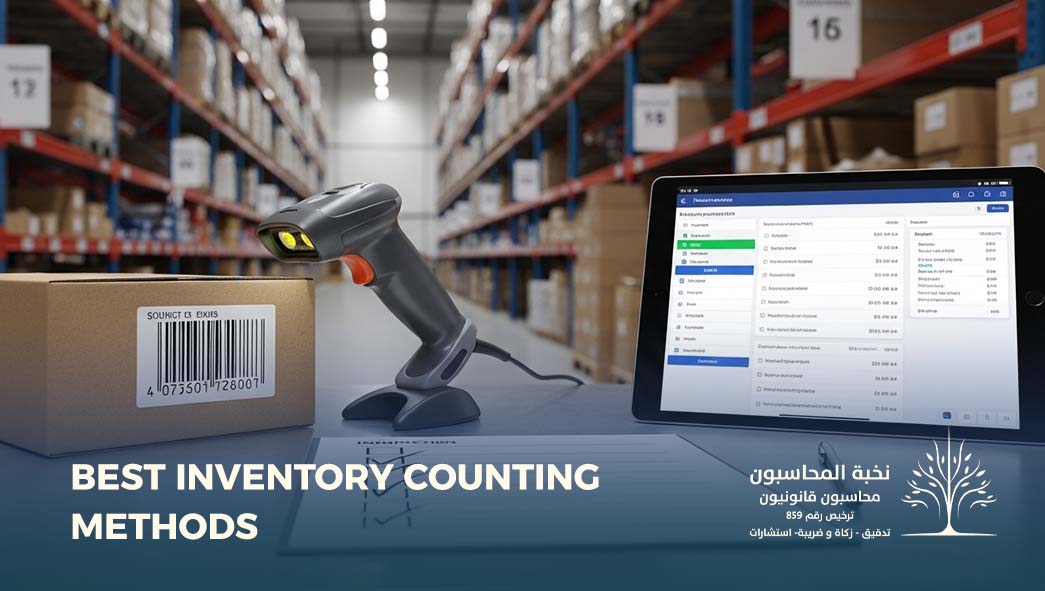
Inventory represents one of the largest current assets on the balance sheet for commercial and industrial enterprises, making its accounting and control an essential requirement to ensure the accuracy of reported figures. In Saudi Arabia’s fast-growing business environment, inventory counting is the optimal tool to verify that actual stock matches recorded data and to prevent gaps that could lead to financial waste or errors in profit estimation.
This article explores the accounting methodologies used in inventory counting and how to handle discrepancies to ensure financial data accuracy at the end of the reporting period.
Understanding Inventory Counting
Inventory counting is defined as the quantitative and qualitative verification of goods and materials held in an organization’s warehouses at a specific point in time. The process goes beyond simple numerical counting to become a control tool that identifies damage, obsolescence, or shortages resulting from poor management.
Counting methods vary depending on the size of operations and the accounting systems in place, allowing each organization to adapt the process to its operational and control requirements.
Types of Inventory Counting
Inventory counting can take multiple forms depending on its purpose, timing, and the technology used. Leading companies often employ a combination of the following types:
Physical Inventory (Full Count)
A complete on-site counting of all units and items, used as a definitive reference to validate ledger balances before issuing the annual financial statements.
Practical Example: A major automotive dealership counts all spare parts and new vehicles across all showrooms and regional warehouses before closing the fiscal year accounts.
Surprise Inventory
A preventive audit performed without prior coordination with the staff responsible for the assets. Its primary goal is to ensure behavioral and operational compliance and prevent attempts to conceal shortages.
Practical Example: The CFO of a wholesale distribution company conducts an unannounced visit to a refrigerated warehouse to verify that actual product quantities match daily issuance reports.
Perpetual Inventory
Relies on digital integration between sales and warehouse systems, updating balances automatically with each transaction. This allows management to monitor stock and cash flow in real time.
Practical Example: Saudi e-commerce platforms connect applications directly to smart warehouses, so customer purchases instantly reflect in available stock levels.
Selecting the appropriate counting method paves the way for choosing the accounting system through which the data will be processed, either manually or automatically.
Strategic Choice Between Periodic and Perpetual Inventory
Organizations generally rely on two main inventory management systems, differing in recording methods and timing of financial results. The choice depends on the nature of the business and the need for real-time data:
Periodic Inventory
This system involves a full count only at the end of the fiscal period, with no updates to stock records after each sale. Its simplicity makes it ideal for small businesses with limited product lines and minimal technological resources, where cost of goods sold is calculated at year-end.
Perpetual Inventory
Provides real-time control by automatically updating accounting records with every sale or purchase. This system is essential for large enterprises and modern retail outlets, offering precise insights into inventory levels at any moment, reducing shortages, and facilitating supply planning without waiting until year-end.
Inventory Counting Methods: From Traditional to Digital
The method used for counting depends on warehouse size and available technological resources:
Manual Counting: Using paper sheets, teams count and record inventory manually. While simple, this method is prone to human error and time-consuming.
Barcode Scanning: Handheld scanners read product codes, speeding up the process and ensuring accurate linkage between items and accounting records.
Radio Frequency Identification (RFID): The most advanced method, allowing rapid counting of large volumes without scanning each item individually, providing unprecedented operational efficiency in smart warehouses.
Importance of Choosing the Right Counting Method
Selecting the correct method is crucial for ensuring accurate balance sheet figures. Modern technology not only reduces time and effort but also contributes to:
Financial Transparency: Minimizes human errors and potential manipulation.
Cash Flow Management: Accurate quantities prevent overstocking or unexpected shortages.
Regulatory Compliance: Facilitates external audits and ensures the organization is prepared for tax and Zakat inspections with reliable data.
The chosen method directly impacts the quality and credibility of comparing actual counts with accounting records.
Integrating Inventory Counting into Financial Statements
Inventory plays a pivotal role in determining net income and financial position. Inventory errors, whether over- or under-stated, can falsely inflate or deflate profits. Accountants apply the principle of “lower of cost or net realizable value” to avoid overstatement and comply with international accounting standards adopted in Saudi Arabia.
Challenges in Inventory Counting
Multiple warehouses or complex product types.
Time constraints at fiscal year-end, risking rushed results.
Need for professional oversight to ensure integrity and proper accounting adjustments.
How Nukhbat Al-Muhasiboon Supports Inventory Counting
At Nukhbat Al-Muhasiboon, we recognize that accurate inventory reflects the health of the organization. We offer professional solutions including:
Supervision of Counting Committees: Ensures impartiality and adherence to professional standards.
Accounting Adjustments: Resolves discrepancies and guarantees accurate inclusion in financial statements.
Warehouse Policy Development: Helps transition from periodic to perpetual inventory systems to enhance control efficiency.
Frequently Asked Questions
Why is it important to compare actual inventory with accounting records regularly?
Regular reconciliation detects manipulation or damage early, ensuring interim financial statements accurately reflect asset values and costs, preventing year-end financial surprises.
Does perpetual inventory eliminate the need for annual physical counting?
No. While perpetual systems provide real-time data, physical counts are necessary to verify actual stock and detect discrepancies due to human error or unrecorded damage.
How do inventory errors affect taxes and Zakat?
Inventory valuation directly impacts taxable and Zakat profits. Overstated inventory may lead to higher Zakat payments, while understated inventory could trigger audits and penalties from the Zakat, Tax and Customs Authority due to inaccurate financial statements.