
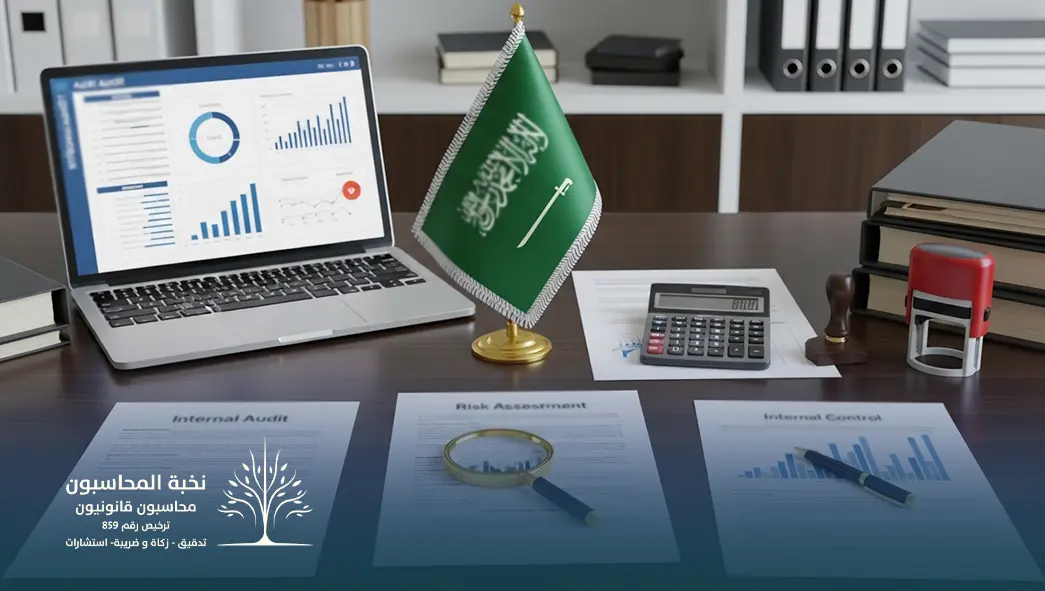
The rapid economic transformations taking place in the Kingdom of Saudi Arabia, in alignment with the goals of Vision 2030, have made internal auditing a fundamental pillar that goes beyond being merely a traditional control function. Today, it is an indispensable strategic partner for ensuring business sustainability and enhancing transparency.
Compliance with internal audit standards represents the key difference between organizations that merely survive and those that strive for leadership and growth through strong governance and proactive risk management.
In this article, we highlight the professional standards adopted in the Kingdom, review the most common mistakes that may hinder the effectiveness of internal auditing, and explain how organizations can transform internal audit from a procedural burden into a value-added function that supports objectives and protects assets.
What Are Internal Audit Standards in Saudi Arabia?
Internal audit standards in Saudi Arabia consist of a set of professional rules and regulations issued by the Saudi Organization for Chartered and Professional Accountants (SOCPA). These standards aim to regulate and unify auditing practices across both public and private sector entities.
Saudi Arabia primarily adopts the International Professional Practices Framework (IPPF) issued by The Institute of Internal Auditors (IIA), with adaptations to align with the Kingdom’s legal and regulatory environment.
Importance of Internal Auditing for Companies
Internal auditing goes beyond detecting errors; it represents the third line of defense within an organization and a guarantee for sustainable growth. Its importance is reflected in the following:
- Protecting company assets: Continuous auditing acts as a preventive barrier against fraud and financial waste.
- Ensuring accuracy of financial reports: It verifies that financial statements reflect the company’s true position.
- Compliance with laws and regulations: It ensures adherence to Zakat, Tax, and Customs Authority regulations and Saudi labor laws.
- Improving operational efficiency: By identifying process gaps and providing recommendations to enhance workflow.
Key Internal Audit Standards
International and local standards are structured around several core areas to ensure audit quality:
First: Attribute Standards
These focus on the characteristics required of individuals and departments performing internal audits:
- Purpose, authority, and responsibility: The audit function’s objectives must be defined in an internal audit charter.
- Independence and objectivity: Audit activities must be separate from operational functions.
- Competency and due professional care: Auditors must commit to continuous learning and high accuracy standards.
Second: Performance Standards
These describe the nature of internal audit activities and provide criteria for evaluating performance:
- Managing the audit activity: Effective planning to ensure real value is added to the organization.
- Nature of work: Evaluating governance processes and risk management systems.
- Communicating results: Preparing accurate, objective reports and presenting them to relevant stakeholders.
Difference Between Saudi and International Standards
| Comparison | Saudi Standards (SOCPA) | International Standards (IIA) |
|---|---|---|
| Supervisory Body | SOCPA | Institute of Internal Auditors |
| Scope | Focus on Saudi regulations and legal environment | Global framework applied across countries |
| Application | Mandatory for entities subject to Saudi regulations | Guiding professional framework |
Recent Updates in Internal Audit Standards
Key updates aim to enhance transparency and accountability, including:
- Integration of artificial intelligence: Using machine learning to predict financial risks.
- Sustainability and ESG governance: Expanding audits to include environmental and social responsibility.
- Cyber resilience: Increased focus on information security as an integral part of internal auditing.
Common Mistakes in Applying Internal Auditing
Despite its importance, many companies make critical mistakes that limit audit effectiveness:
- Direct reporting to the CEO: A major mistake is having internal auditors report to the person they audit. Audit functions should report to the audit committee or board to maintain independence.
- Focusing only on the past: Traditional audits review completed transactions, while modern auditing emphasizes future risks and prevention.
- Treating the auditor as a “policeman”: This perception reduces cooperation. A successful auditor is a partner focused on improvement, not just error detection.
- Ignoring technological advancements: Relying on manual audits in the digital era reduces accuracy and overlooks valuable data insights.
- Lack of follow-up on recommendations: The real value lies in ensuring recommendations are implemented and gaps are closed.
Internal auditing in Saudi Arabia represents a true safeguard for any organization seeking growth and sustainability. Adhering to SOCPA and IIA standards not only protects companies from financial and legal risks but also provides forward-looking insights that enhance operational efficiency and competitiveness.
In light of digital transformation and modern tax complexities, establishing an effective internal audit function is no longer optional—it is a strategic necessity to ensure long-term success and professional integrity.
If you want to avoid common mistakes and ensure professional implementation of internal audit standards, Nukhbat Al-Muhasiboon Financial and Management Consulting offers its extensive expertise to support you. We help you build a strong control system that protects your investments and drives sustainable growth. Contact us today for a specialized consultation.
Frequently Asked Questions (FAQ)
Is internal auditing mandatory for all companies in Saudi Arabia?
It is not mandatory for all entities, but it is required for publicly listed companies, financial institutions (banks and insurance companies), and large organizations that follow governance standards.
What is the difference between internal and external auditing?
Internal auditing is an ongoing activity aimed at improving internal processes and managing risks, usually performed by in-house staff or permanent consultants. External auditing is conducted annually by an independent audit firm to express an opinion on financial statements.
Can an internal auditor participate in operational activities?
No, internal auditors must not perform executive or operational tasks (such as approving payments or invoices), as this compromises their independence.
How does internal auditing reduce tax and zakat risks?
Internal auditing acts as a first filter by reviewing compliance with e-invoicing requirements, VAT calculations, and the accuracy of zakat filings before submission, helping companies avoid significant penalties.