
In the business world, profits and sales may appear to be the most obvious indicators of a company’s success. However, financial stability and regulatory compliance depend on a far more important element: accounting books. Regardless of the size of a business, the absence of a well-organized accounting system can lead to costly financial errors, difficulties in preparing reports, and legal issues with regulatory authorities.
In this article, we explore the concept of accounting books, their importance, their main types, record-keeping requirements, and the role of professional accounting firms in organizing and managing them efficiently.
First: What Are Accounting Books?
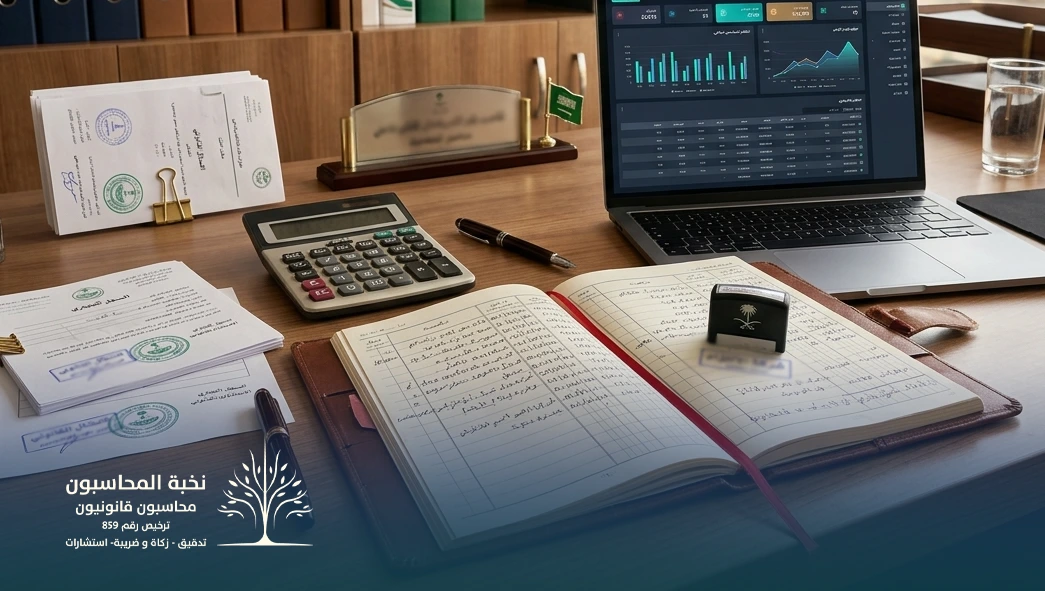
Accounting books are official records used to document and record all financial transactions carried out by a company in an organized and accurate manner. These transactions include sales, purchases, expenses, revenues, financial transfers, and other activities that impact the financial position of the business.
Accounting books serve as the primary source for preparing financial statements, analyzing financial performance, and measuring profitability. They also provide accurate data that can be referenced during internal and external audits or when regulatory authorities request access to financial records.
Second: The Importance of Accounting Books for Businesses
Accounting books are the foundation of financial management for any company. They go beyond recording numbers and figures by providing a comprehensive view of the company’s actual financial position, enabling management to make informed and effective decisions.
Key benefits of accounting books include:
- Recording all financial transactions in an organized manner.
- Providing accurate information to support management decisions.
- Enhancing transparency for investors and business partners.
- Facilitating the preparation of financial statements and reports.
- Supporting compliance with applicable laws and regulations.
- Helping identify financial errors at an early stage.
- Protecting the company’s rights in the event of financial or legal disputes.
In addition, accounting books help businesses continuously evaluate financial performance, identify strengths and weaknesses, and develop effective improvement plans. The more accurate and organized the financial records are, the greater the company’s ability to achieve growth and long-term sustainability in a competitive business environment.
Third: Types of Accounting Books
Businesses rely on several types of accounting books, each serving a specific role in recording and analyzing financial information. Understanding these books is essential for maintaining an effective accounting system that complies with accounting standards.
1. General Journal
The General Journal is used to record all financial transactions as they occur and in chronological order. It serves as the starting point of the accounting cycle.
2. General Ledger
The General Ledger contains transactions transferred from the journal to individual accounts, making it easier to determine account balances and analyze financial data.
3. Inventory Books
Inventory books are used to document assets, inventory, and financial obligations. They play an important role in verifying the accuracy of financial information.
4. Subsidiary Records
These are detailed records that support main accounts, such as customer accounts, supplier accounts, and fixed asset records.
Using these books together helps create a strong financial system that provides reliable information for planning, decision-making, and regulatory compliance.
Fourth: How Do Accounting Books Support Financial Decision-Making?
Successful business decisions rely on accurate and up-to-date information. Accounting books play a critical role in providing the data needed to evaluate financial performance and analyze operational results.
When financial records are organized and regularly updated, management can accurately assess revenues, expenses, profitability levels, and cash flows. This information also supports budgeting, identifying growth opportunities, reducing costs, and improving resource allocation.
Through the information derived from accounting books, businesses can:
- Measure financial performance regularly.
- Monitor cash flow effectively.
- Identify sources of profit and loss.
- Plan for growth and expansion.
- Manage financial risks efficiently.
For this reason, accounting books are not merely record-keeping tools; they are one of the most important sources of information that support business continuity and strategic objectives.
Fifth: Common Mistakes in Managing Accounting Books
Despite their importance, many businesses make mistakes that affect the accuracy of financial data and create administrative and regulatory challenges.
Some of the most common mistakes include:
- Delaying the recording of financial transactions.
- Losing supporting documents and accounting records.
- Failing to perform regular account reconciliations.
- Relying on outdated records.
- Entering incomplete or inaccurate information.
- Not seeking assistance from accounting professionals.
While these mistakes may initially seem minor, they can result in significant consequences over time, including difficulties in preparing financial reports and making decisions based on inaccurate information.
How Nukhbat Al-Muhasiboon Helps Organize Accounting Books
Managing accounting books professionally requires specialized expertise and a thorough understanding of accounting standards and regulatory requirements. This is where Nukhbat Al-Muhasiboon provides integrated accounting solutions that help businesses organize their financial records efficiently.
The firm offers bookkeeping services, financial reporting, and accounting reviews in accordance with best professional practices, ensuring the accuracy of financial information and easy access to records whenever needed.
In addition, the firm’s team provides specialized accounting consultations that help business owners improve financial management and strengthen compliance, while delivering practical solutions that support long-term growth and stability.
Frequently Asked Questions
What is the difference between accounting books and accounting records?
Accounting books are the primary records used to document financial transactions, while accounting records include all supporting documents and information used to verify and analyze those transactions.
Can accounting books be managed electronically?
Yes. Many businesses use accounting software and digital accounting systems to record transactions, store financial information, and generate reports quickly and accurately.
Why do small businesses need accounting books?
Accounting books help small businesses track revenues and expenses, manage cash flow, and make sound financial decisions regardless of the size of their operations.
Start Organizing Your Accounting Books with Nukhbat Al-Muhasiboon
Accounting books are the cornerstone of effective financial management. They help businesses achieve transparency, maintain compliance, and make decisions based on reliable information. The better organized financial records are, the greater the company’s ability to grow and confidently overcome business challenges.
If you are looking for a trusted accounting partner to help organize your accounting books and manage your financial operations professionally, Nukhbat Al-Muhasiboon provides the expertise and practical solutions your business needs.
Contact Nukhbat Al-Muhasiboon today and let our accounting professionals help you build a more efficient and financially stable system.