
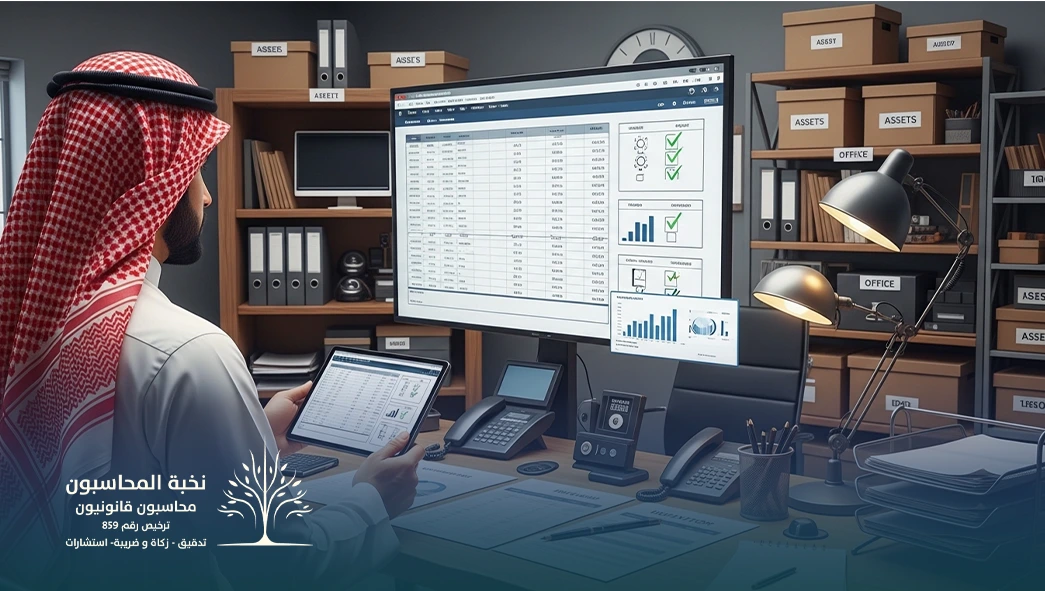
In the modern business world, companies rely on financial data to make strategic decisions related to investment, risk management, and expansion. As financial operations become more complex and the variety of assets increases, a complete accounting inventory of assets becomes an essential tool to ensure the accuracy of financial reports and detect errors before they turn into major issues that could affect a company’s performance and reputation.
If you aim to enhance the transparency of your company’s financial data and improve the reliability of your reports, implementing a complete accounting inventory in a precise and systematic way is the optimal step to achieve that goal.
Why Is a Complete Accounting Inventory of Assets Essential for Companies?
A complete accounting inventory is a comprehensive process that includes all company assets, whether cash, real estate, investments, or equipment. Its importance lies in several key benefits:
-
Achieving high accuracy in financial data: It helps identify any errors or gaps in financial records.
-
Enhancing trust among investors and partners: Reliable financial statements increase a company’s credibility.
-
Improving strategic decision-making: Management relies on accurate numbers to determine spending and investment priorities.
-
Reducing legal and financial risks: A comprehensive inventory ensures compliance with financial laws and accounting standards.
Practical Example:
A manufacturing company discovered a discrepancy of SAR 200,000 in its inventory during a full accounting inventory due to incorrect entries. The issue was corrected before presenting the financial statements to investors, helping protect the company’s reputation and strengthen partner confidence.
Steps for Conducting an Accurate Accounting Inventory: From Planning to Final Report
To gain maximum benefit from a complete accounting inventory of assets, companies must follow structured steps that ensure all assets are recorded, financial records match reality, and discrepancies are identified.
1. Defining the Scope of the Inventory
The company’s management and accounting team determine which assets will be included in the inventory, such as:
-
Cash and bank balances
-
Inventory and raw materials
-
Real estate and fixed equipment
-
Investments and shares
Tip: Clearly identifying assets from the beginning reduces the risk of missing important items during the inventory process.
2. Preparing the Core Financial Data
Before starting the inventory process, it is necessary to collect:
-
Financial records and invoices
-
Legal contracts related to assets
-
Previous inventory reports (if available)
This preparation reduces errors and ensures that all assets are covered.
3. Physical Inventory and Asset Verification
-
Inspect actual assets and compare them with accounting records.
-
Document any discrepancies and attach supporting documentation.
4. Reviewing Results and Analyzing Discrepancies
-
Analyze possible causes of discrepancies.
-
Prepare a comprehensive report presenting the findings and recommendations to management.
Practical Example:
In a real estate company, differences were discovered between land ownership records and official documentation. The financial values were adjusted to reflect the actual situation before preparing the final financial statements.
The Importance of a Complete Accounting Inventory of Assets
A full accounting inventory goes beyond simply counting assets or verifying financial values. It plays a key role in improving the quality of a company’s financial data. Its benefits include:
1. Greater Financial Data Accuracy
By examining all assets carefully, discrepancies between records and actual assets can be detected, including data entry errors, missing transactions, or inaccurate asset valuation.
2. Increased Investor and Partner Confidence
Reliable financial statements enhance the company’s credibility with investors and banks, making it easier to secure financing or establish strategic partnerships.
3. Improved Managerial Decision-Making
Management relies on accurate data to determine investment priorities, manage risks, and allocate resources effectively.
4. Reduced Legal and Financial Risks
A comprehensive inventory ensures that financial data complies with accounting standards and legal regulations, reducing the risk of violations or financial disputes.
Practical Example:
A trading company discovered during a full inventory that the recorded raw material stock differed from the actual stock by SAR 150,000. Correcting this error before preparing financial statements prevented inaccurate information from being presented to investors and banks, protecting the company’s reputation.
Modern Tools and Technologies for Accounting Inventory
To maximize the effectiveness of a complete accounting inventory of assets, companies can utilize modern tools and technologies that improve accuracy and speed.
1. ERP Systems and Accounting Software
These systems enable companies to track assets electronically, reduce manual errors, and generate accurate real-time reports.
2. Barcode and RFID Technologies
These technologies allow real-time monitoring of assets and inventory, particularly in large warehouses or companies with dynamic inventory systems.
3. Periodic vs. Continuous Inventory
-
Periodic Inventory: Assets are reviewed at specific intervals, suitable for companies with limited inventory.
-
Continuous Inventory: Assets are monitored daily or monthly, suitable for large companies or dynamic projects.
Professional Tip: Combining periodic and continuous inventory methods provides greater accuracy and helps detect discrepancies more quickly, improving financial data reliability.
How Do Accurate Accounting Procedures Help Detect Errors?
Organized accounting procedures help identify financial errors early and ensure the accuracy of records before final reports are prepared. Reviewing data systematically makes it easier to detect and correct discrepancies in a timely manner.
1. Reviewing Financial Transactions
Ensure that payments and revenues match supporting documents such as invoices and contracts, helping identify duplicate or incorrect transactions.
2. Matching Data Across Different Systems
Comparing records across financial systems such as accounting and inventory management helps ensure consistency and eliminate discrepancies.
3. Verifying Compliance with Financial Policies
Review financial operations to confirm they comply with internal company policies and procedures.
4. Detecting Calculation or Data Entry Errors
Regular auditing helps identify simple input or calculation mistakes and correct them before they impact financial reports.
The Difference Between Partial Inventory and Full Accounting Inventory
| Element | Partial Inventory | Full Accounting Inventory |
|---|---|---|
| Scope | A specific department or asset type | All financial and physical assets |
| Objective | Examine specific points | Ensure comprehensive financial data accuracy |
| Time and Cost | Lower | Relatively higher |
| Level of Detail | Limited | Comprehensive and in-depth |
Conclusion
A complete accounting inventory of assets is not merely a routine procedure; it is a strategic tool that enhances financial data accuracy, improves management decisions, and detects potential errors before they escalate.
If you want to ensure the accuracy of your company’s financial reports and maximize the value of your assets, contact the experts at Nukhbat Al-Muhasiboon today to receive comprehensive support in implementing a complete accounting inventory of assets using modern tools and techniques. Accurate financial reports will help you make confident and well-informed financial decisions.