
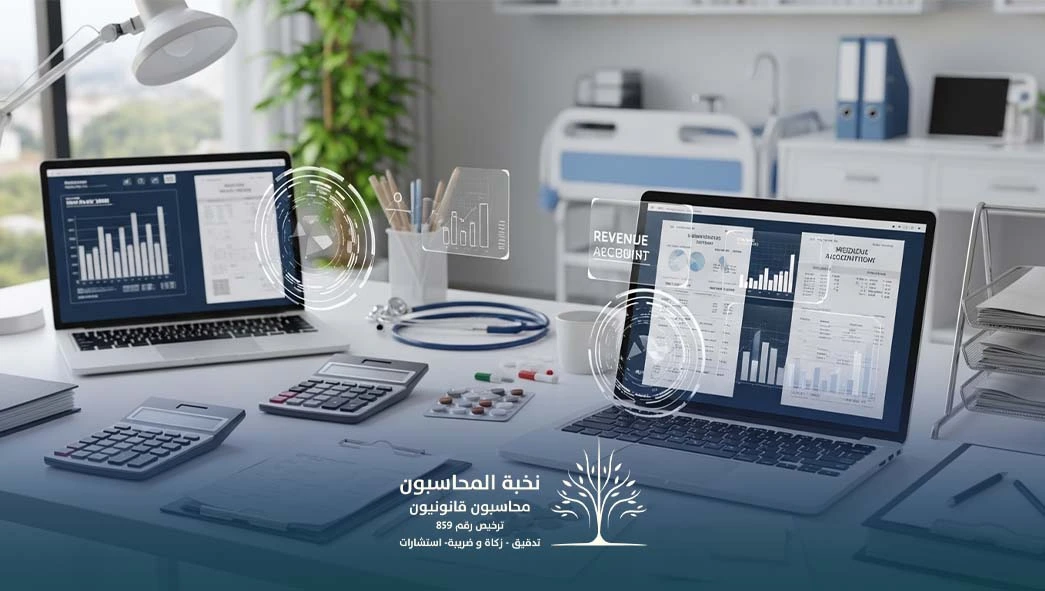
In the healthcare sector, daily operations move at a rapid pace—from patient admissions and service registration to dispensing medications and managing clinics and hospitals. Despite this high level of activity, many healthcare facilities discover that their profits or financial efficiency do not truly reflect the scale of their operations. A minor mistake in recording a medical service or calculating the cost of treatment may occur repeatedly, eventually influencing financial decisions in subtle but significant ways.
This is where healthcare accounting services become essential. They connect daily operations, expenses, revenue streams, and inventory within a unified accounting system. Rather than simply recording transactions, these services provide management with analytical tools that reveal the true financial performance of every hospital, clinic, or medical center. The goal is to convert everyday data into strategic insights that strengthen profitability and safeguard resources.
In this article, we will explore the fundamentals of healthcare accounting and highlight the most important elements that enable healthcare organizations to control costs, manage revenue effectively, organize medical inventory, maintain regulatory compliance, and achieve long-term financial stability.
Accurate evaluation of medical service costs for financial efficiency
Many healthcare organizations assume that monitoring daily revenue is enough to assess performance. In reality, genuine profitability becomes clear only when the cost of each service or medical procedure is carefully analyzed. Through healthcare accounting services, every service can be linked to the attending physician, direct costs such as medications and medical supplies, and indirect costs including utilities and staff wages.
This approach reveals the true profit margin of each medical procedure and distinguishes between services that generate meaningful returns and those that consume resources without adequate benefit. It also supports the restructuring of pricing strategies, promotional offers, and procurement planning for pharmaceuticals and consumables.
Another advantage lies in the ability to make well-informed decisions about expanding services or introducing new medical specialties based on reliable financial data rather than superficial figures. Comprehensive financial analysis transforms accounting numbers into strategic insights that improve efficiency and protect financial resources.
Connecting daily operations with accounting systems to avoid discrepancies
Hospitals and clinics handle a wide range of daily activities, including service registration, medication dispensing, and billing. If these processes are not accurately recorded, they can easily create inconsistencies in financial data. Healthcare accounting services address this issue by integrating service-point systems with the accounting platform in real time.
This integration ensures precise revenue collection, immediate detection of discrepancies or errors, and daily reports that allow management to track financial performance across departments and physicians. It also enables organizations to monitor discounts or medical exemptions and understand how these adjustments influence net profitability.
Smart management of pharmaceuticals and medical supplies to preserve capital
Managing medical inventory involves more than simply listing products. It requires monitoring the usage of medicines, consumables, and treatment equipment to avoid tying up excessive capital. With healthcare accounting services, organizations can:
-
Track each unit of medication or supply from purchase to use or sale.
-
Identify slow-moving inventory and determine whether discounts or price adjustments are necessary.
-
Evaluate how inventory levels affect cash flow and allocate liquidity more effectively.
Accurate inventory oversight minimizes waste, prevents shortages of essential supplies, and strengthens financial planning. Reliable data also supports better purchasing decisions, ensuring that medications remain available without unnecessarily locking capital into unprofitable stock.
Ensuring reliable financial records through effective internal controls
Internal control systems form the first line of defense against financial errors and potential losses. With healthcare accounting services, organizations can:
-
Separate responsibilities among employees to guarantee dual verification of financial transactions.
-
Conduct immediate reviews of sensitive operations such as medication dispensing and invoice registration.
-
Implement automated alerts that detect unusual fluctuations in revenue or expenses.
-
Generate detailed daily reports on the performance of departments and branches.
These measures reduce financial leakage, improve the reliability of financial data, and give management confidence when making strategic decisions based on accurate information rather than rough estimates.
Coordinating financial performance across departments and clinics
When healthcare facilities operate multiple departments, clinics, or branches, maintaining financial oversight becomes challenging without a unified accounting framework. Healthcare accounting services make it possible to:
-
Monitor the financial performance of each department or clinic in real time.
-
Standardize accounting systems to simplify analysis and oversight.
-
Compare departmental performance and identify opportunities for improvement or unusual discrepancies.
-
Manage cash flow and inventory between departments to maintain balanced liquidity and profitability.
Such coordination reduces financial waste, enhances operational efficiency, and ensures that management can make reliable decisions across all locations.
Protecting the organization through tax compliance and regulatory monitoring
Tax compliance is not optional; it is a critical element of financial stability for any healthcare organization. Healthcare accounting services help ensure compliance by:
-
Accurately recording all revenues and expenses to prevent violations.
-
Integrating financial processes with tax systems to reduce legal risks.
-
Preparing regular reports for submission to regulatory authorities.
-
Assisting management with tax declarations and legal documentation.
As a result, organizations reduce the risk of penalties, remain prepared for audits, and maintain smooth operations without disruptions that could affect profitability.
Choosing the right accounting partner to strengthen healthcare operations
Managing accounting functions in the healthcare sector requires a strategic partner who understands the unique challenges faced by hospitals, clinics, and medical centers. At Elite Accountants, we provide:
-
Tailored financial solutions for each organization based on its size and services.
-
Detailed analysis of revenue streams, costs, inventory, and overall financial performance.
-
Standardized internal control mechanisms across departments to ensure data accuracy.
-
Strategic financial guidance that helps management make decisions based on reliable figures.
The result is a transformation of accounting from an administrative burden into a strategic tool that enhances profitability, improves operational efficiency, and ensures full regulatory compliance.
Frequently Asked Questions
Can hospital accounting and small clinic accounting be integrated into one system?
Yes. A unified system can connect all financial activities, enabling easier monitoring and analysis while maintaining accurate records.
Can small medical centers benefit from these services?
Absolutely. Even facilities with limited services gain value from accurate revenue tracking, inventory monitoring, and profitability analysis for each service offered.
Can specialized accounting improve patient experience?
Yes. Efficient financial management ensures the availability of medications and supplies, accelerates billing processes, and allocates sufficient resources for improved patient care without reducing profitability.
Is it possible to forecast the profitability of each department?
Yes. Through regular financial reports and detailed cost-revenue analysis, healthcare organizations can develop accurate financial plans for expansion or service improvement.
Conclusion
With healthcare accounting services from Elite Accountants, every financial transaction, service, and expense becomes more than just a number—it becomes a strategic insight that supports profitability, improves performance, and ensures legal compliance.
Contact us today for a customized consultation and transform your accounting into a financial and strategic strength that drives the growth of your healthcare organization with confidence.