
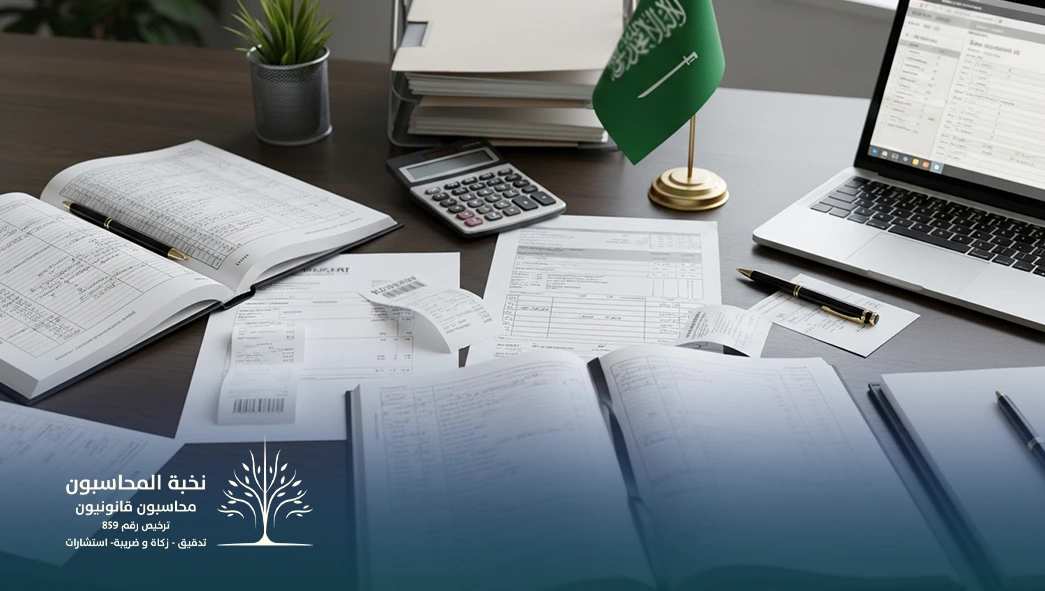
Bookkeeping goes beyond merely recording numbers; it is the financial mirror that reflects a company’s health and its ability to grow and sustain operations. With rapid digital transformation and the implementation of the e-invoicing system in Saudi Arabia, accurate bookkeeping is no longer just an organizational option—it is a strategic necessity to protect businesses from legal and tax risks and to provide a reliable database for making smart investment decisions.
In this article, we will guide you through the world of numbers and accounts, revealing how to maintain accounting books and use them to support your financial strategies in the Saudi business environment.
What Is Bookkeeping?
Bookkeeping is a vital part of any organization’s financial operations, forming the foundation upon which administrative and financial decisions are built. It involves accurately recording all financial transactions—from invoices, expenses, and salaries to preparing financial statements that clearly and fairly reflect the company’s financial position.
Maintaining accounting books in Saudi Arabia requires a solid understanding of:
- International Financial Reporting Standards (IFRS): Adopted by the Saudi Organization for Chartered and Professional Accountants (SOCPA).
- Local tax regulations: To ensure compliance with the Zakat, Tax, and Customs Authority (ZATCA).
- Modern technologies: Using cloud-based accounting systems to enable access to information anytime.
At Nukhbat Al-Muhasiboon, we recognize that bookkeeping is the cornerstone of financial excellence, and we follow best practices to ensure efficiency and full compliance with legal requirements.
Importance of Bookkeeping for Companies in Saudi Arabia
Bookkeeping is the backbone of business sustainability in the Kingdom, and its importance includes:
- Tax and zakat compliance: Proper bookkeeping ensures accurate filing of VAT, withholding tax, and zakat returns, helping avoid costly penalties.
- Data-driven decision-making: Organized records provide clear insights into profitability and cash flow, enabling informed expansion and investment decisions.
- Access to financing: Banks and financial institutions require organized and audited records to assess creditworthiness before granting loans.
- Control and asset protection: Accurate recording reduces the risk of fraud and ensures continuous tracking of assets.
- Readiness for tax audits: Well-organized records serve as the first line of defense during inspections by authorities.
Bookkeeping Requirements in Saudi Arabia
To ensure your company’s books are accepted by regulatory authorities, the following requirements must be met:
- Language and currency: Records must be maintained in Arabic and amounts recorded in Saudi Riyals.
- Supporting documents: Each entry must be backed by an original document (invoice, contract).
- Record retention period: Books and documents must be retained for at least 10 years.
- Technical compliance: Accounting systems must support e-invoicing integration requirements.
- Consistency: Entries must be sequential and free from unjustified alterations.
Bookkeeping Under Vision 2030 and Digital Transformation
Manual bookkeeping is no longer acceptable in the modern Saudi business environment. With initiatives like e-invoicing, integrating accounting systems with government platforms has become mandatory to enhance transparency and reduce the shadow economy.
How to Maintain Accounting Books Step by Step
Here are the essential steps:
- Determine the types of books: Choose appropriate records (journal, ledger, payroll).
- Daily recording: Document transactions as they occur.
- Periodic review: Conduct internal checks to ensure accuracy.
- Compliance with IFRS: Apply standards approved by SOCPA.
- Digital archiving: Use cloud solutions to securely store data.
Types of Accounting Books and Their Importance
- Journal: For chronological recording of transactions.
- General Ledger: For classifying and summarizing accounts.
- Inventory Book: For tracking inventory and assets.
- Cash Book: For monitoring cash flow.
Difference Between Bookkeeper, Collector, and Accountant
| Role | Main وظيفه | Objective |
|---|---|---|
| Bookkeeper | Recording daily transactions and entries | Accurate documentation of data |
| Collector | Following up on receivables and collections | Maintaining cash flow |
| Accountant | Analyzing data and preparing financial reports | Strategic decision-making |
Common Bookkeeping Mistakes (and How to Avoid Them)
- Mixing personal and business accounts: Leads to unclear profitability.
- Accumulating entries: Causes document loss and weak control.
- Losing original invoices: Weakens the company’s position with tax authorities.
- Ignoring bank reconciliation: Prevents timely detection of discrepancies.
- Incorrect expense classification: Distorts financial statements.
Why Choose Nukhbat Al-Muhasiboon for Your Bookkeeping?
- Accuracy and compliance: Full alignment with SOCPA standards and ZATCA regulations.
- Analytical insight: Turning numbers into strategic reports that support growth.
- Cost efficiency: Professional solutions at competitive prices suitable for all business sizes.
Complying with bookkeeping requirements in Saudi Arabia is the true guarantee for sustainable business growth and protection from legal risks. At Nukhbat Al-Muhasiboon, we are committed to delivering effective solutions that ensure accuracy and financial excellence.
Contact us today for a specialized consultation and safeguard your business future.
Frequently Asked Questions About Bookkeeping
Is bookkeeping mandatory for small sole proprietorships?
Yes, ZATCA regulations require all VAT-registered entities (or those exceeding certain revenue thresholds) to maintain proper accounting records and tax invoices, regardless of size.
Can I use foreign accounting software in Saudi Arabia?
Yes, provided it supports ZATCA requirements such as Arabic language, Saudi Riyal currency, and e-invoicing (Phase 2 integration), and complies with Saudi standards.
What are the penalties for not maintaining proper books?
ZATCA imposes financial penalties that may start from thousands of riyals and increase with repeated violations. Lack of proper records may also lead to estimated tax assessments, often higher than actual liabilities.
How often should I review my accounting books?
Monthly internal reviews are recommended to reconcile bank statements and correct errors promptly, with mandatory reviews aligned with tax filing periods (monthly or quarterly).