
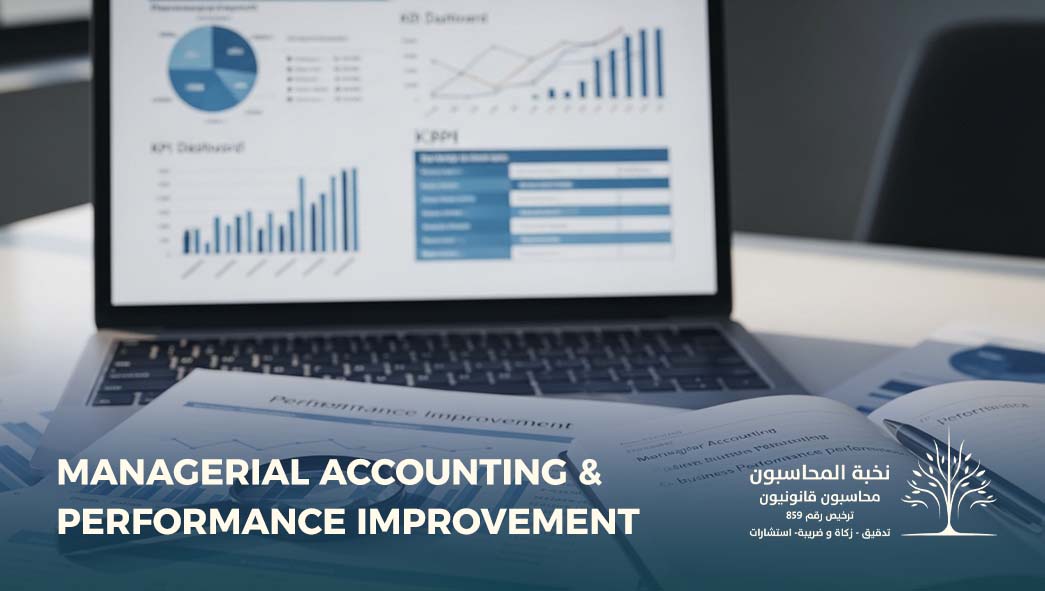
Management accounting represents one of the most important tools relied upon by senior management in Saudi companies to achieve a balance between strategic vision and financial reality. It does not merely record historical transactions; instead, it focuses primarily on the future by providing accurate data that helps guide organizations toward sustainable growth.
Today, the success of any organization in the Saudi market depends largely on its ability to transform raw numbers into effective managerial reports that support sound financial planning and accurate budgeting. This ensures efficient spending and helps companies achieve their profitability goals.
What Is Management Accounting?
Management accounting is an internal information system designed to collect and analyze financial and non-financial data and convert it into managerial reports that assist management in financial planning, budgeting, performance monitoring, and supporting operational and strategic decisions.
Management accounting focuses on meeting the needs of internal management with a high level of flexibility, helping organizations improve resource utilization and enhance profitability within Saudi enterprises.
The importance of this system goes beyond simple reporting; it forms the cornerstone for shaping the future of the organization. This leads us to understand the main objectives it seeks to achieve.
Main Objectives of Management Accounting Within Organizations
Management accounting aims to achieve several strategic objectives that ensure an organization’s sustainability and competitive advantage. The most notable objectives include:
Supporting Accurate and Timely Decision-Making
Management accounting helps prioritize sound financial and administrative decisions by analyzing real-time data, enabling management to respond quickly in urgent situations.
Proactive Solutions and Risk Management
It acts as a protective shield for the organization by anticipating potential problems before they occur, making it an effective approach to crisis management and reducing the likelihood of failure.
Improving Operational Efficiency and Reducing Losses
Through early monitoring of financial or operational deviations, management accounting helps identify the causes of waste and address them immediately.
Motivating Employees and Enhancing Organizational Alignment
Clear objectives and results reflected in managerial reports help motivate employees and link individual performance to the company’s strategic goals.
Providing Data for Planning and Control
Management accounting helps map future financial paths through accurate data analysis and advanced analytical tools that ensure operations align with planned strategies.
Transforming these objectives from theoretical concepts into practical results highlights the critical role played by the management accountant as a strategic partner within the organizational structure.
The Role of Management Accounting in an Organization
The role of management accounting goes far beyond numbers; it becomes a driving force behind internal organization and a key contributor to institutional success. This role is reflected in four main pillars:
Strategic and Operational Planning
The management accountant collects and analyzes key data to help develop short- and long-term strategic plans. Their role goes beyond planning to designing programs that ensure the optimal use of company resources—both financial and human—to sustain growth.
Accurate Monitoring and Control
Management accounting functions as a control mechanism that ensures operations proceed according to planned strategies. By monitoring data and analyzing deviations in real time, organizations can verify the effectiveness of policies and their alignment with changing market conditions, protecting the company from potential risks.
Efficient Resource Organization
This role involves the wise management of all company assets—from capital, expenses, and revenues to equipment and human resources. The objective is to prevent waste and ensure that every resource is directed toward activities that generate the highest value for the organization.
Supporting Alternative Decision-Making
In a dynamic business environment, the ability to make alternative decisions is critical. The management accountant provides all necessary data and potential scenarios that help leadership determine the appropriate time to implement alternative decisions, ensuring flexibility in the face of uncontrollable external changes.
The key question then becomes how these roles are implemented in practice through modern techniques and methodologies.
Modern Tools and Methods in Management Accounting
To maximize the benefits of management accounting, organizations rely on a unique integration between operational tools and advanced methodologies.
First: Core Tools for Planning and Control
Budgeting
Budgeting is the primary tool for financial planning. In management accounting, budgeting does not merely involve estimating figures; it includes developing flexible budgets that can adapt to market changes. This allows organizations to control costs, ensure efficient spending, and maintain a balance between available resources and strategic objectives.
Cost Accounting
This tool analyzes the cost of products and services accurately, helping organizations develop fair and competitive pricing policies.
Periodic Performance Reports
Regular managerial reports provide insights into the performance of various departments and highlight strengths and weaknesses.
Break-Even Analysis
This technique determines the level of sales required to plan production levels and avoid financial losses.
Second: Advanced Methodological Approaches
Activity-Based Costing (ABC)
A method that allocates costs more accurately based on the actual resources consumed by each activity.
Balanced Scorecard (BSC)
A strategic management system that links financial performance with operational performance and customer satisfaction to achieve a comprehensive organizational vision.
Management by Exception
This approach focuses managerial attention on significant deviations only, saving time and effort in monitoring routine operations.
Continuous Improvement
This approach integrates accounting data into daily improvement processes to reduce waste and increase organizational value.
Implementing this integrated system directly enhances an organization’s competitive strength, highlighting the vital importance of management accounting in the contemporary Saudi business environment.
The Importance of Management Accounting in Improving Organizational Performance
Management accounting plays a vital role in enhancing the competitiveness of Saudi companies, especially in light of the Kingdom’s ongoing economic transformation. Its importance appears in several areas:
Supporting Financial and Operational Decisions
Management accounting provides analytical insights that help organizations compare investment alternatives and ensure financial decisions are based on solid and realistic foundations.
Budget and Resource Planning
It supports the preparation of projected budgets, which act as a roadmap for allocating financial resources to the most productive channels.
Monitoring Administrative and Financial Performance
Through performance monitoring, deviations can be detected and corrected quickly, preventing financial waste and improving productivity.
Common Management Accounting Mistakes to Avoid
Despite its powerful benefits, management accounting can produce negative outcomes if certain mistakes are overlooked, such as:
-
Relying only on historical data, which disconnects financial planning from changing market realities.
-
Ignoring non-financial information, such as service quality, which may lead to incomplete insights for decision-makers.
-
Failing to update budgets regularly, turning them into static figures that no longer reflect current business conditions.
How Nukhbat Al-Muhasiboon Can Help Implement Management Accounting
At Elite Chartered Accountants, we help organizations build advanced accounting systems that include:
-
Preparing advanced managerial reports that provide a comprehensive view of operational efficiency.
-
Developing financial planning models aligned with Saudi Vision 2030.
-
Supervising annual budgeting processes and designing performance monitoring systems.
Do you want to transform your financial data into intelligent tools that support better decisions?
Contact Nukhbat Al-Muhasiboon today to build a professional management accounting system that strengthens your company’s financial performance.
Frequently Asked Questions
What is the fundamental difference between financial accounting and management accounting?
The main difference lies in the target audience and purpose. Financial accounting is legally required and focuses on external reports for investors and government entities, while management accounting is an internal system designed to provide managers with the data needed for financial planning and daily strategic decision-making.
How does financial planning protect Saudi businesses from crises?
Financial planning acts as a protective shield by forecasting future cash needs and analyzing different scenarios. This allows organizations to maintain adequate liquidity and avoid sudden financial shortages by developing flexible budgets that adapt to market changes.
Do small and medium-sized businesses need budgeting and performance monitoring services?
Yes, absolutely. Budgeting and performance monitoring are not limited to large corporations. Small and medium-sized businesses need them even more to improve spending efficiency, prevent financial waste, and support sustainable growth.
How do managerial reports support decision-making in a company?
Periodic managerial reports provide accurate insights into product profitability, activity costs, and departmental performance. These insights allow management to compare investment options and determine the right time for expansion or cost reduction based on real data rather than assumptions.